
KENOSPHERA
Impressions from The Quantum Choir's latest iteration

Hi there. I’m writing from the golden Autumn rains of my window at the outskirts of the Montseny natural park in Catalonia. I got back home after two weeks of working with my choir in Antwerp for the Articulate research festival. Two weeks ago, on Friday, October 17, we—the Antwerp iteration of the Quantum Choir—opened up the cloister of our little singing community and invited, for the first time, a listening audience for a snippet of what we’ve been working on. What we’ve been working on recently are experiments that are part of my artistic research project, The Voice of Many Waters. The Voice of Many Waters (which is a biblical metaphor for the divine voice) is the title for how I’m trying to iterate and give voice (both metaphorically and tangibly) to auditory insights that I find in the mystical literature of 16th-century Spanish Carmelite nuns. The Quantum Choir, on the other hand, is a living community of wonderful people of diverse artistic backgrounds with whom I have the privilege to delve into some pretty deep collective sonic explorations.
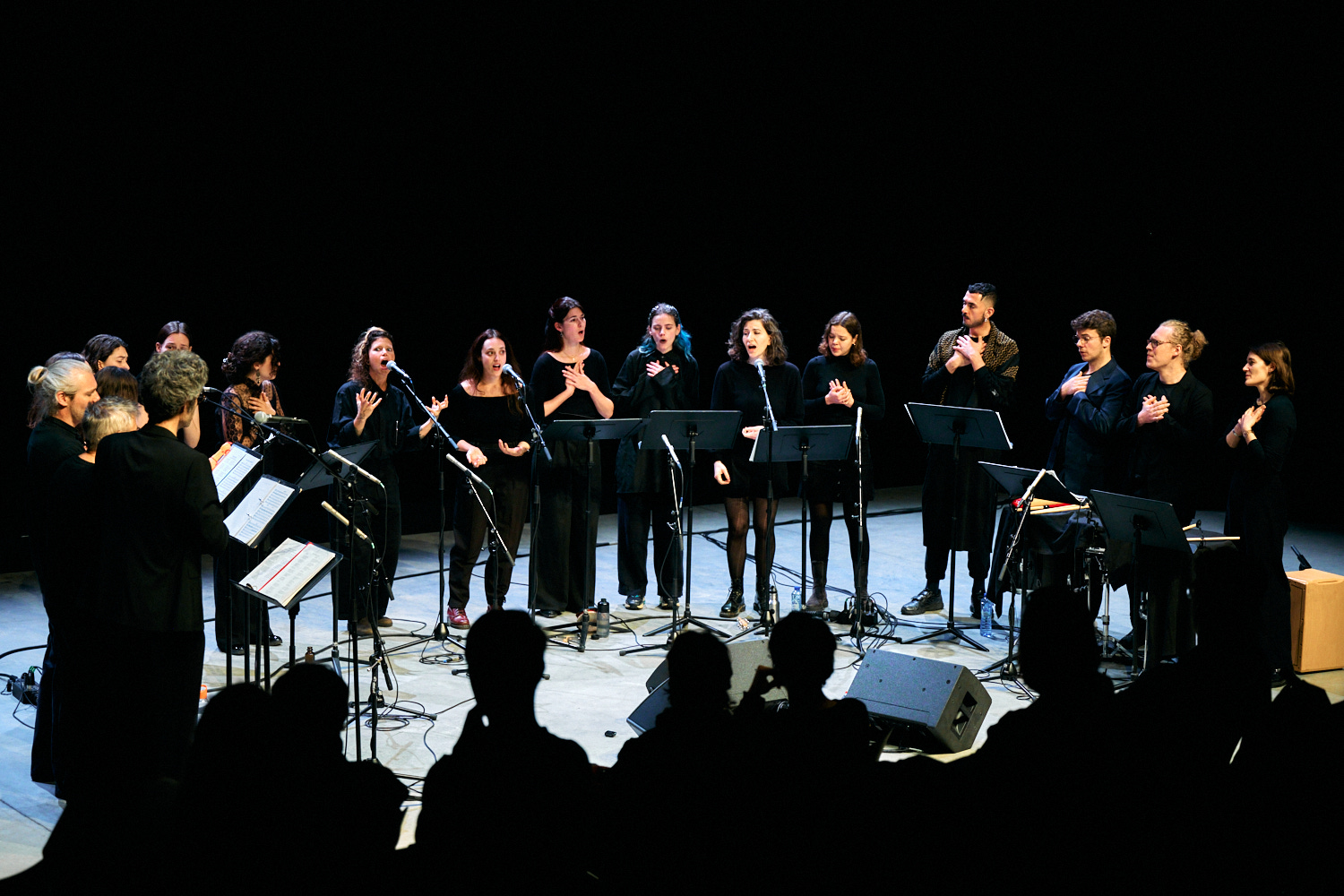
The concert began with us already practicing one of our text-ture open scores while the audience gradually entered the space. After this, I gave a little introduction talk, while the choir, as I talked, resonated back into the room bits and pieces of the existing soundscape: room-tones, floor-noises, soft resonating frequencies, and bits of the talk itself—phonemes of the words that came out of my mouth. These gradually gave way to a silence, giving the words somewhat of a priority in the perception of the listeners. These were the words I said:
“Let’s go five centuries back in time: the year is 1562, in the barren lands of central Spain. Thirteen nuns, fighting against the severe Church authorities, barricade themselves in a little country house and set out for a new spiritual journey. In their very special way, they sang, they listened, they wrote, they contemplated...
Back to the here and now:
Today’s concert was announced as KENOSPHERA, which is a combination of two concepts; one theological, the other auditory. But both have a geometrical element in common: a space.
Kenosis (without risking a dangerous theological debate) is known as the self-emptying of the divine’s godliness to become human, to become a body. In nuns’ terms, think of it as making space for the Other inside oneself.
Sonosphera, on the other hand—or sononsphere—in sound studies, is a resonating sphere of sound that spreads around from the listening body in all directions.
So what we call KENOSPHERA is a resonating empty space.
Now, and please bear with me here, if we think of our body as a resonating space which we empty out to make room for something other than ourselves—perhaps new perception, a new understanding, other beings or entities, the collective...—then in a sense, we (the choir) are now emptying ourselves as a group, and making space for YOU: the listening bodies present in the space with us, to fill it up with the new sense that YOU can make of what we are doing.
The reason I’m throwing these strange concepts at you is that this research, this exploration called The Voice of Many Waters, is also about making sense, and specifically, making sense of the world through sound. Even more specifically, how Carmelite nuns from 16th-century Spain made sense of the world through sound, and what we can learn from them about our own making sense of the world through sound, if that makes sense. Because you know, words—there’s only a limit to what they can signify, to what sense they can make for us, and there’s a whole other dimension of sense within language other than the meaning of the words...
Anyway, that’s on the lofty level.
On the worldly level, let me tell you about the program you’re about to hear. Most of it is from a collection of tunes, the cancionero carmelitano: the Carmelite Songbook I’m creating. The texts are in part liturgical chants, used by the nuns for prayer; some are paraliturgical songs, written by the nuns for their community life outside of prayer; and some are actually bits of prose from their spiritual testimonies—and there’s even a text from the constitution of the order. Musically, these words are reiterated by us, through deconstructed Spanish folk melodies and rhythms.
The tunes you’ll hear are moments in time, learned by oral transmission; they’re in a constant state of flux and shift, they are never to be finished, always changing, and *this* iteration is where we’ve brought them to at *this* point in time, like the way folk music travels—in a process of iteration and re-iteration. We are in a dialogue—a sort of seance—with voices that were there before us; we come to pay respect to them, to learn from them with great curiosity and humility, like the good old community of nuns who we echo. So the “new”, or the novelty here, comes from the meeting point—from the fact that *we* are making space in our bodies to let these past voices resonate through us, right here and now.
We hope you have an interesting experience, and if you’re curious where this is going or want to know more about this project and our future mischiefs, you’re welcome to write me or subscribe to this newsletter.
A final request, please don’t clap between the tunes; we invite you to enjoy with us the silences between the sounds as part of the music itself, so if you can, please save the traditional applause for the very end. See you on the other side!”
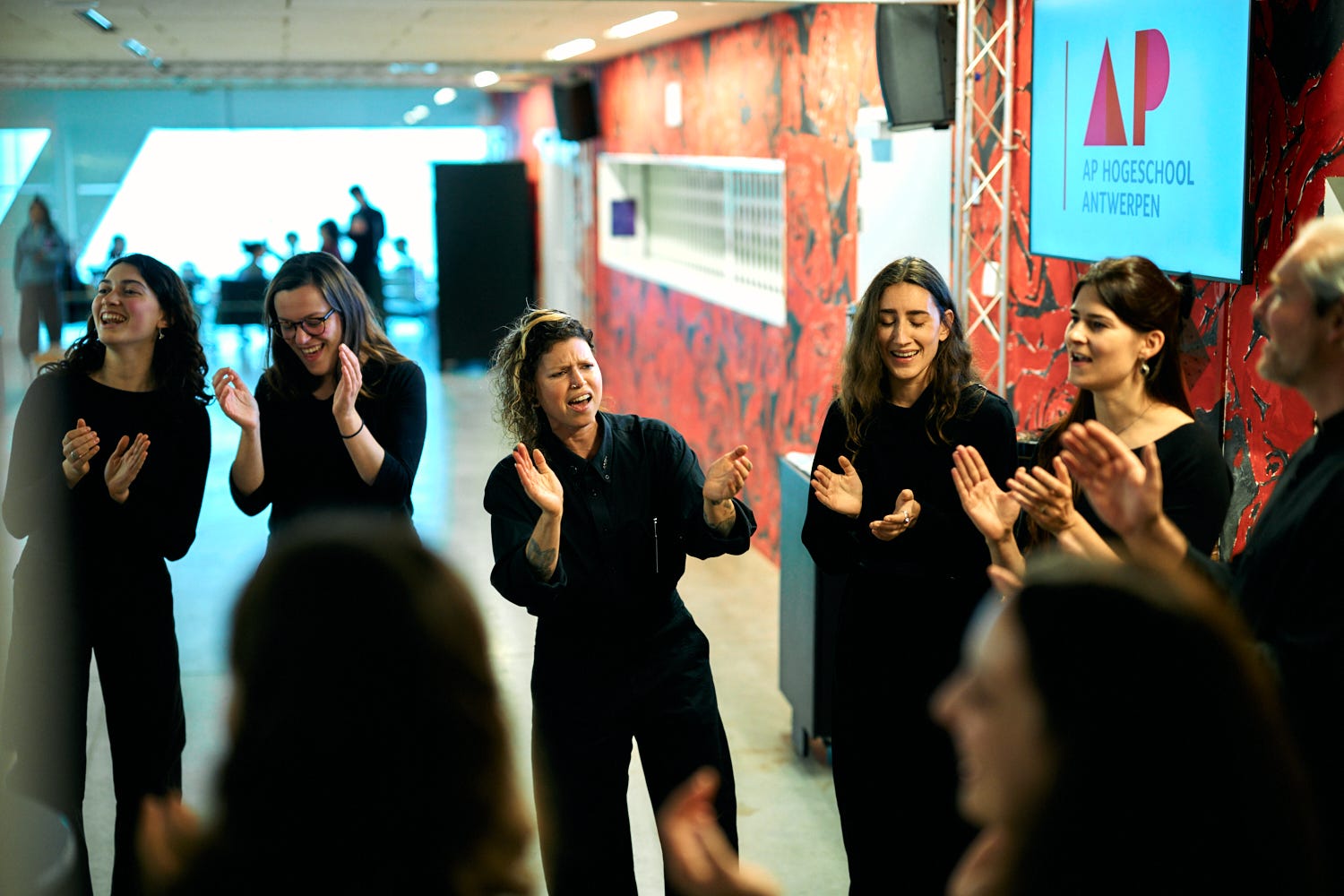
The day before the concert, when we sat down to conclude our two weeks of working together on this program, one of us was on to something special that happened on the final rehearsal the previous day: “Was I even singing? It was as if the music was singing itself.” Then it struck me: *this* is the KENOSPHERA. When you manage, in those very rare moments of sorcery, to genuinely empty yourself and let something that is not you pass through you, when you let the sounds sound themselves. This kind of experience is why I became interested in devotional music in the first place, and in the relationship between the mystical and the sonic—and I’m saying this from the perspective of someone who grew up in the most radically atheist community imaginable (I’ll have to tell you about that another time). This is when you really let go of everything but being the vessel of something so powerful that you could not have had anything to do with its creation.
In the next entry, if all goes well, I’ll post one of the songs we performed and tell you the story that brought it to being.
Thanks for reading, and as usual, feel free to reach out if any of the notions thrown here perk your itch.
See you next time.